
The binomial footwear molds and materials is a fundamental element in the production of custom molded shoes. Knowing the material that will be used is actually fundamental even in the early stages of design.
TPU, PVC, natural rubber, and EVA have different physical characteristics and behavior during processing. Flow, pressure, temperature, expansion, vulcanization, abrasion, and cooling are variables that can affect the mold's characteristics and the production process.
Because of this a shoe mold must also be designed according to the material it will have to work with.
It's not simply a matter of reproducing the geometry defined by the project: it's necessary to develop a solution capable of combining shoe design, material characteristics, production technology, and the quality required of the finished product.
Shoe molds and materials: a unique project
Different materials behave differently inside the mold.
Numerous aspects must therefore be evaluated during the design process: cavity filling methods, operating temperatures and pressures, possible material expansion, the need to evacuate air and gases, cooling, component extraction, and possible abrasive action on the surfaces.
The geometries, channels, vents, finishes and construction characteristics of the mould can therefore also vary depending on the material.
The goal is to create a aluminum mold for footwear optimized for the specific production process, capable of ensuring precision and repeatability during the various processing cycles.
TPU shoe molds
The TPU – thermoplastic polyurethane It is a material appreciated in the footwear sector for its characteristics such as elasticity and resistance and finds application, for example, in the production of sports shoes, sneakers, safety shoes and technical sandals.
In the design of the TPU shoe molds It is necessary to take into particular consideration the pressures reached during injection and the abrasive action exerted by the material.
The mold must therefore offer adequate structural strength and surface characteristics consistent with the conditions of use.
The precision of the workmanship also allows for a good definition of textures and details, a particularly important aspect when the technical performance of the shoe is combined with specific design needs.
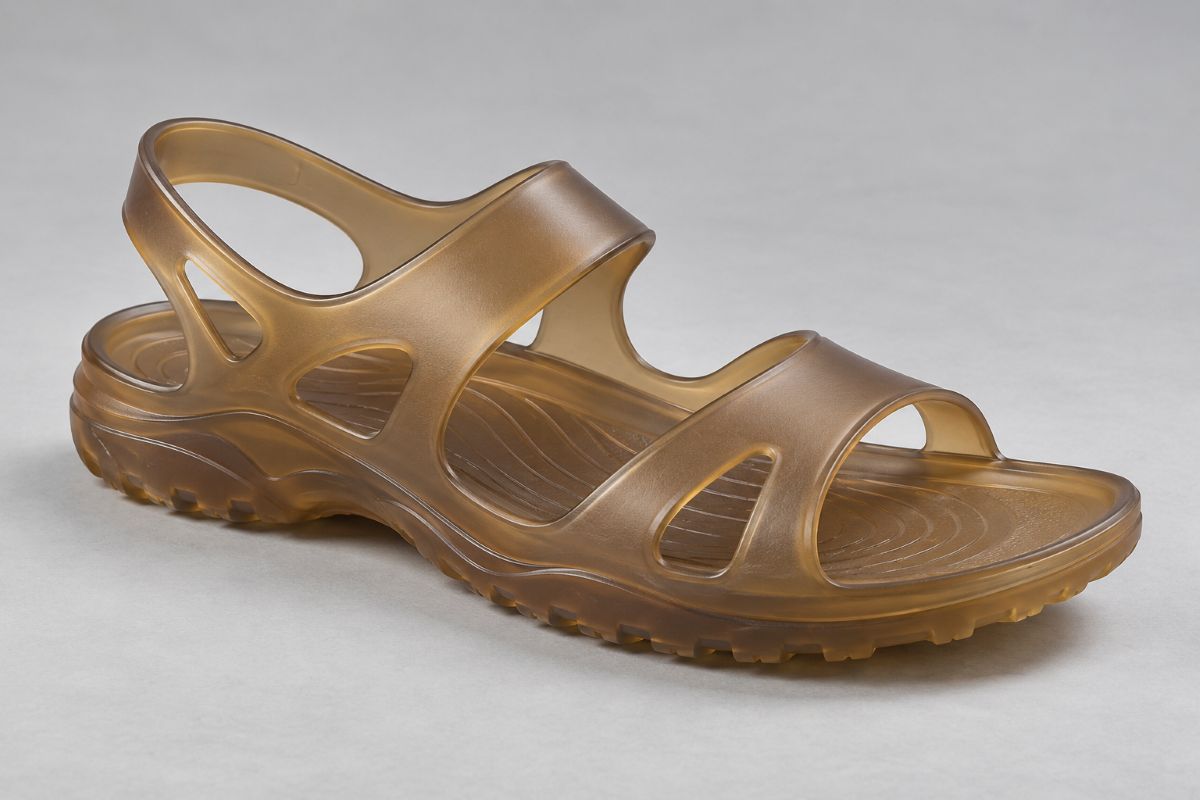
PVC shoe molds
The PVC – polyvinyl chloride It is a versatile material, available in numerous colors and used for different types of footwear.
In the design of the PVC shoe molds, one of the aspects to consider is the correct flow of material inside the cavity.
Channels and geometries must favor its regular distribution, while the good thermal conductivity of aluminum allows for effective management of heat exchange and cooling.
Mold design must also help limit aesthetic defects and ensure product quality even in high-volume production runs.
To learn more about this material, the article dedicated to aluminum molds for PVC footwear, in which the characteristics, advantages and applications in the footwear sector are analysed.
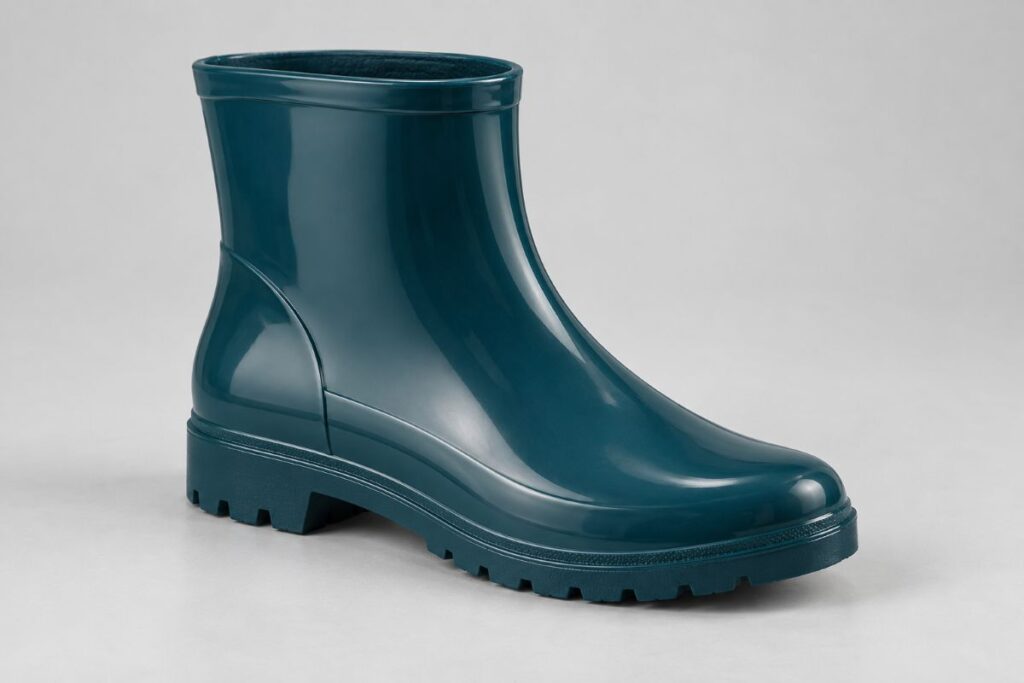
Natural rubber shoe molds
There natural rubber has different needs than thermoplastic materials.
The molds intended for its processing must be designed to operate at the temperatures required by the vulcanization process and to allow the correct evacuation of the gases generated during processing.
The design of the vents It therefore takes on particular importance: adequate gas evacuation contributes to the correct formation of the component and the quality of the surfaces.
Rubber also offers wear-resistant properties and allows for the creation of even complex textures. Consequently, machining precision and mold surface quality become important aspects from both a production and aesthetic standpoint.
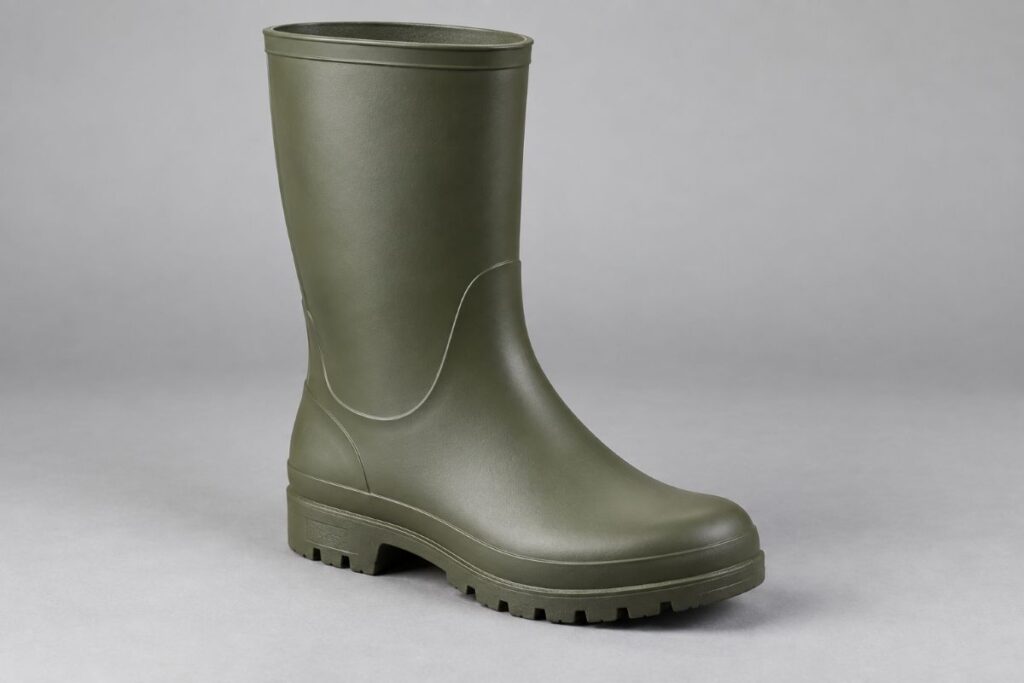
EVA shoe molds
THE'’EVA – ethylene vinyl acetate It is a lightweight, flexible, and shock-absorbing material used in the footwear industry for various applications.
Its processing places a specific requirement on the mould designer: properly manage material expansion during the process.
When creating aluminum molds for EVA footwear, geometry, draft, and temperature control must be carefully evaluated, considering the material's behavior during the various production phases.
The design must favor the correct distribution of the expanded material and the subsequent extraction of the component from the mold.
This is a particularly significant example of how the characteristics of the material can directly influence the choices made during the development of the mold.
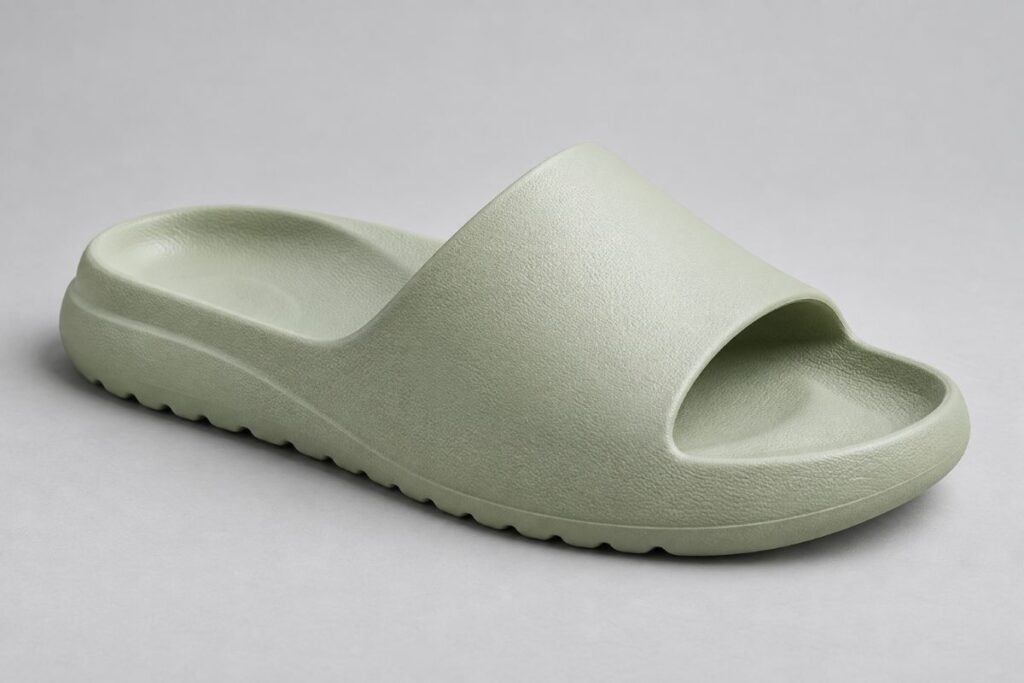
Vents, ducts and material management
The comparison between TPU, PVC, natural rubber and EVA allows us to understand how some apparently secondary details of the mould can take on a fundamental role.
Vents, ducts and filling geometries must be defined by simultaneously considering the shape of the component and the behavior of the material.
In some processes, it is necessary to promote a smooth flow within the cavity; in others, it becomes crucial to allow the evacuation of air or gas; in still others, the expansion of the material must be considered.
The relationship between footwear molds and materials shows us that there is no single configuration that is valid for all materials: these elements must be designed according to the specific application.
Finishes and textures also depend on the material
The material also influences the ability to reproduce textures, patterns and details defined by the project on the footwear.
When the design includes particular surface characteristics, the mold processing must take into account both the desired aesthetic result and the behavior of the material during the process.
Sandblasting, photoengraving, textures and different finishing levels They thus become part of a project in which design, materials and production technology must communicate with each other.
The quality of the mold is therefore measured not only in dimensional precision, but also in the ability to transfer the aesthetic characteristics envisaged by the project to the component.
Aluminum in the production of shoe molds
In the relationship between shoe molds and materials, the choice of aluminum offers particularly interesting characteristics.
Thermal conductivity helps manage temperatures and cycle times, while the material's workability allows for highly precise geometries, textures, and details.
The choice of alloy must also be consistent with the conditions in which the mold will be used and with the stresses determined by the material and the production process.
Padana Stampi uses certified aluminum alloys, including 7000 series alloys, to develop molds for the various needs of footwear production.
Each material requires its own mold
Designing a shoe mould therefore means knowing not only the product to be obtained, but also how the material will behave during production.
TPU, PVC, natural rubber, and EVA all pose different challenges and require specific considerations regarding pressure, temperature, flow, expansion, vulcanization, abrasion, venting, and extraction.
Padana Stampi designs and manufactures custom molded shoes developed according to the material, the production process and the technical and aesthetic characteristics required by the project.
It is from the integration of these elements that a mold is born capable of transforming the chosen material into a precise, repeatable product consistent with the shoe's design.